

Do any reading about Doc Holliday and you’ll likely come across references to his “beloved antebellum”Georgia and/or South. Finding statements that Doc Holliday would have been just as racist as everyone else of his time, place, and class is also common.
But would he?
There is a certain “truthiness” to these sentiments, in that they feel like they should be true. But assuming everyone in the past had racist convictions (and forgiving them for it) undermines the few who–even back then–recognized the system was wrong.
Lazily assuming everyone was racist and that was okay back then effectively places a bushel over the light thrown from those brave souls who were always on the right side of history, even when it was a hard, lonely, and dangerous road.
So let’s take a closer look because, while Doc may never have forgotten his Georgia roots, what Georgia meant to Doc might be entirely different from the stereotypical beliefs attributed to him.
Doc Was Not Brought Up That Way
Doc Holliday’s father, Henry Burroughs Holliday, was a very enlightened man. He adopted a Mexican child at the end of the Mexican-American War, raising him as his son. This at a time when racists considered Mexicans and Indians barely human. Although popular with his troops–H.B. was elected to Major–the man got himself invalided1 out of the Confederacy fairly early, and after the War Henry Burroughs Holliday worked for the Freedmen’s Bureau.
You read that right. Doc Holliday’s father was a “scalawag.”
H.B.’s neighbors shunned him and called him vile names in the street. He lived with the very real threat of being lynched by people who considered him a “race traitor.2“
Nevertheless, as Agent he championed the Freedmen, getting them fair contracts and material resources. He was obviously liked because, even after he was no longer an Agent, his Black neighbors continued to come to him when they needed justice.
Also, H.B. Holliday was a shopkeeper. So Doc did not grow up part of the planter class. He was not an aristocrat with money and land and a big house and slaves to do all the work for him. He lived out in the piney woods at Valdosta, practically the frontier, and his father sold stuff—horse buggies3, for a while. Then he became locally famous for his plant nursery, growing grapes and pecans. I’m going to devote a blog post to H.B. later. But you get the point. This branch of the Holliday family was a long way from Tara.
Doc Did Not Live That Way
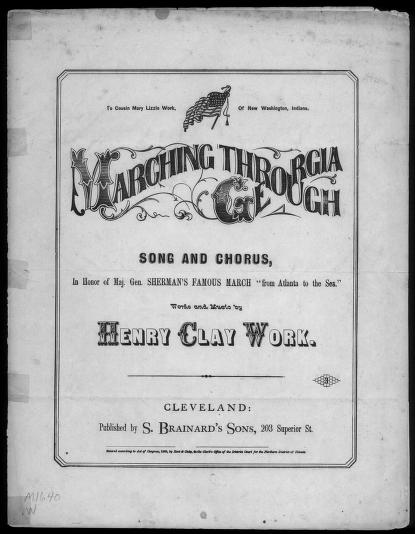
For a very long time, it was assumed Doc went to dental school in Baltimore. Because Baltimore is in the South, and Southerners hated Yankees after the War of Northern Aggression, so why would Doc go anywhere else?
Now, some Southerners did feel that way. Doc’s cousin Mattie famously hated the Yankees and refused to enter a convent in the North. Despite her dream to become a nun, despite the Order she wanted to join being an International entity, Mattie nevertheless waited until she could begin her novitiate in the South.And she never left the South. She never even left Georgia.
But Doc went to dental school in PHILADELPHIA. The North.
Both Baltimore and Philadelphia had highly respected dental schools, and they both drew students from North and South. However, in Doc’s graduating class at the Pennsylvania College of Dental Surgery, he was one of seven students from the South. Seventeen came from the North.5
In comparison, of graduates at the Baltimore College of Dental Surgery the same year, seven came from the North and eleven came from the South. If Doc had felt it important to be with fellow Southerners who presumably thought the same way he did6, he could have gone to Baltimore. He didn’t.
Clearly being surrounded by Yankees in Yankee territory didn’t bother Doc.
In Tombstone, the battle lines were drawn between the Cowboys, ‘criminals’ who were primarily ex-Confederate supporters, and town-based Republicans who had sided with the Union. The Earps had supported the Union.
If you believe in the ‘criminal’ version of Doc Holliday and think he honored the Confederacy, confusion arises as to why Doc isn’t running with the Cowboys. Which is why you get theories that Doc participated in stagecoach robbery, etc. Even the old Wyatt Earp TV series portrays Doc as knowing what was happening in criminal/Cowboy circles (and passing that info on to Wyatt) because Doc was part of them.
However, a non-criminal, Union-supporting professional gentleman from Georgia would have no problem hanging out with the Earps. Doesn’t that interpretation of Doc make more sense?
Doc Wasn’t Bad, But He Was Written That Way

None of the stories about Doc being racist were published during his lifetime.
This is important. The main evidence against Doc is from decades after his death, and written by a man with an agenda.
Doc died in 1887.
In 1907, Bat Masterson wrote a series of articles for Human Life Magazine about famous, dangerous men he had known in the West7. Doc Holliday was the subject of one of these articles. This is where the story of what comes to be known as the Swimming Hole Incident first appears.
Bat writes that, back in Georgia, young Doc discovered some Black youths swimming in a place claimed by white boys. Understandably, the Black boys ran. “Holliday waited until he got a bunch of them together, and then turned loose with both barrels, killing two outright, and wounding several others.”8 Because apparently not only is he a bloodthirsty racist, but in his youth he wandered around Georgia carrying a double-barreled shotgun–coincidentally the weapon most associated with him after the OK Corral. Bat goes on to write that Doc “never boasted”9 about the Georgia killings, but everyone knew he was dangerous anyhow.
One might wonder how Bat heard, if Doc never boasted about it.
Anyway, the point of the story is to establish Doc as a dangerous man. Bat needed something that sounded plausible for a man from the South. 1907 coincides with SecondWave violenceand the broad popularity of the LostCause mythos, so a white man killing Black boys to protect a whites-only location was entirely plausible.
By the way, Bat needed to invent something because Doc wasn’t actually a desperado, but we’ll address that in a future post.
You may have noticed Bat has Doc shooting the Black youths as they fled. Bat’s entire article portrays Doc as a terrible person on all fronts, even throwing in that he was a weakling and a grumpy drunk. It’s obvious that, at this point in time, Bat did not like Doc at all.
I say ‘at this point in time’ because Bat clearly got along with Doc, if only for Wyatt’s sake, during the early years in Dodge City and Tombstone.
However, after the Vendetta Ride, while Wyatt’s reputation suffered, Doc’s reputation plummeted, rapidly growing worse and worse10. Many people felt Wyatt should disavow him, that Doc was dragging Wyatt down. Bat was part of this contingent.
Thus not only is Bat giving the people the portrait of Doc they expect in his article, he is adding stories that lean into the ‘Doc Was The Worst’ narrative so in contrast Wyatt looks better11. Bat’s article on Wyatt Earp emphasizes what a great man he is, brave and tough and able to brawl and win even now. In stark contrast to his assessment of Doc, Bat writes of Wyatt as a man to be truly admired. If he hadn’t been placed in a position where he felt he had to defend his best friend, Bat might not have been so harsh on Holliday.
Happy 174th Birthday, Doc Holliday
So Happy Birthday, John Henry “Doc” Holliday! History may be divided on your character, but one thing everyone agrees on: you liked a fine drink.
In fact, in honor of Doc’s 174th Birthday, four new bourbons are beingreleased.
I’m not benefiting from that link, by the way, I’m just amused. We all want to be a little bit like Doc Holliday, even drinking something he might have liked.
Now you know being on the right side of history also makes you a little bit like him.
Bring the Jubilee!
- TMI but he claimed chronic diarrhea. He got several officers to attest to this. It worked. ↩︎
- For more information on First Wave violence in theReconstruction South ↩︎
- So he basically ran a car dealership. ↩︎
- Work, H. C. C. & Work, H. C. L. (1865) Marching through Georgia. Cleveland: S. Brainard’s Sons. [Notated Music] Retrieved from the Library of Congress ↩︎
- His graduating class also contained students from Canada, Cuba, and Central America. ↩︎
- Remember in the movie Gone With The Wind, Scarlett’s father tells her it doesn’t matter whom she marries as long as they’re a Southerner and they think the same way she does? ↩︎
- These were later gathered up into a book called Gunfighters I Have Known. ↩︎
- Masterson, Bat. Gunfighters I Have Known, 1957, p. 37 ↩︎
- Ibid. ↩︎
- I’ll address that in another blog post. ↩︎
- I will be providing additional information supporting my theory the Swimming Hole Incident never happened in a future blog post. ↩︎
Discover more from Susanne Saville
Subscribe to get the latest posts sent to your email.